
UK Casino Regulations 2026 Complete UKGC Rules Guide
Keep reading to learn how British regulators and other entities keep you safe from harm. The Department for Culture, Media and Sport (DCMS) published its gambling white paper in April 2023, which set out the government’s plans for modernising the regulation of the gambling sector. Google acts as data processor on our behalf, further information is available in Google Cloud Platform Service Specific Terms (opens in new tab) and Google’s Cloud Data Processing Addendum (opens in new tab). Further staking opportunities could be offered within the same game cycle up to the value of £3 for a total staked per game cycle of £5.Scenario CA customer aged 19 stakes £2 on an online slot game. Scenario AA customer aged 27 stakes £5 on an online slot game.
We would also like machines that use the BGC’s Anonymous Player Awareness System (APAS) to implement these limits and for APAS not to act as a substitute for these thresholds. Furthermore, the average stake size on B1 machines is similar to the stake size on B3 machines and therefore we do not think that the mandatory limits should be different between the different categories. In line with their responses to other questions, the pub sector did not want these limits to apply to Category D crane grab machines.
Acknowledging the limitations outlined concerning the consequences of non-compliance or poor performance, we propose that industry fund, conduct, and crucially, report on the outcomes of voluntary test purchasing to DCMS. While the majority of responses stated that this measure would be beneficial, a number of licensing authorities caveated their responses by stating that voluntary commitments are limited due to the lack of consequences conditioned upon poor performance. The benefits of this measure include the ability to assess the adherence of any given premises to these rules and identify points of failure, such as inadequate staff training. This means that many FEC operators do not currently have age-controlled areas and would have to invest in creating such an area for what is a low stake product. This view was most strongly argued by licensing authorities. We did not receive any evidence through consultation to suggest that we should not proceed with the measure as outlined in the government’s white paper.
Affiliate Compliance
The information that an ombudsman collates through complaints will assist the Gambling Commission in planning its enforcement activity and help industry to improve processes and support vulnerable consumers. This means customers seeking personal redress in these areas currently have no choice but to pursue potentially costly and uncertain court action. This aims to build capacity and start filling the key evidence gaps identified by PHE’s evidence review. Government will also co-host workshops with UK Research and Innovation (UKRI), the umbrella body for the UK research councils, Innovate UK and Research England, to stimulate interest and investment in gambling research.

Additionally, an objective of this measure is to reduce average session duration, which is linked to gambling harm. On the other hand, in 62% of all sessions from April to September 2019, the player either won money on the machines or lost an amount up to £20. However, these rates are lower than the majority of other gambling products, although remain above the at-risk and problem gambling rates for ‘any gambling activity’. Please explain your answer, including an alternative solution for how to calculate non-gambling areas where applicable. • Any non-gambling area may consist of one or more areas within the premisesDo you agree that this should remain the same under the new regime? It is for the Scottish Ministers to consider whether they want to amend the Mandatory and Default Conditions that apply to casinos located in Scotland.
There are no statutory stake limits on other forms of in-person gambling such as casino table games or over the counter betting. Slower and less intense games are also likely to generate less revenue than the current games (subject to the precise rule change), but in our view they will make the gambling product offer more sustainable rather than relying on potentially harmful practices to keep customers engaged. However, as one think tank pointed out, reasonable minimum standards are in fact a targeted intervention as they prevent designedly harmful or risky play, but do not impact how most people actually use online products.
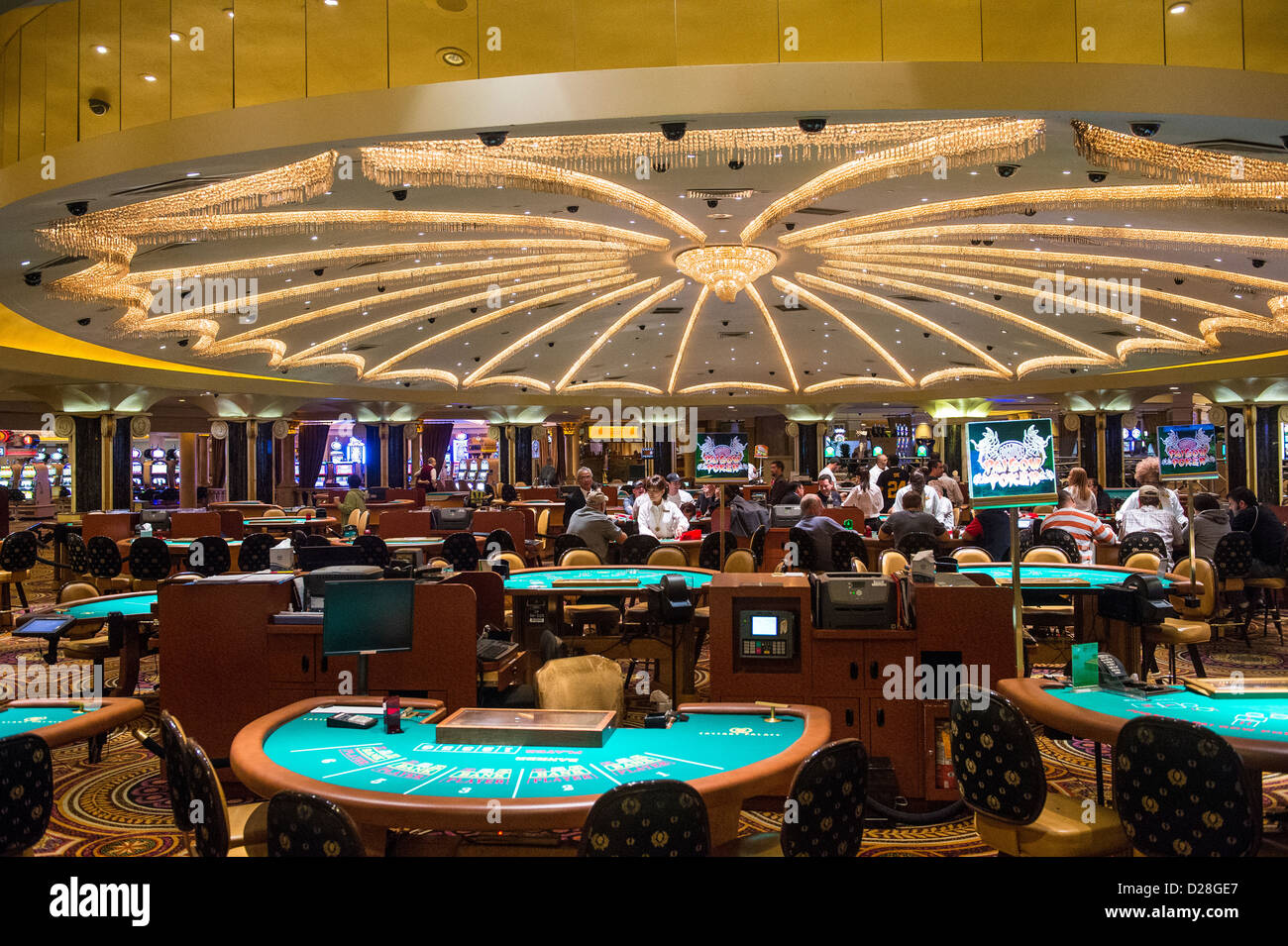
In order to limit the facility to offer credit to overseas customers, we propose to remove the prohibition only in respect of customers not resident in the UK. However, in one casino it accounts for around 48% of overall money exchanged for chips within the venue in a typical year. No workable alternatives have been identified despite government and operators having been in discussion on this issue since the withdrawal of cheques was first mooted by the banking sector in 2017.
Similar provisions of the Act relate to gaming and gaming machines in licensed premises in Scotland, but these apply to premises which have a premises licence granted under the Licensing (Scotland) Act 2005. 1968 Act casinos are limited to 20 gaming machines only, regardless of size, unless they restrict themselves to lower stakes machines only. The land-based sector includes casinos, licensed betting offices, licensed bingo premises, family entertainment centres, adult gaming centres, and on-course betting at racecourses.

All casinos casinos not on gamestop listed on UKVerifiedCasinos.uk are manually checked against this register as part of our editorial process. You can verify any casino’s licence status for free at the UKGC Public Register. In 2025 alone, the UKGC levied over £100 million in penalties against licensed operators for regulatory failures — demonstrating that the UK casino regulations 2026 carry real consequences. The UKGC has the power to issue fines, suspend licences, or revoke them entirely for operators that fail to comply. All seven casinos reviewed on this site comply with the current rules. Under the the casinos in our table, a £20 bonus now requires a maximum of £200 in wagering before you can withdraw.
However, given these enhanced protections and the experience of 2005 Act casinos since the Act was introduced, we consider it would be justified to bring greater coherence to the licence system by applying the same principles to casinos of a certain size. The Gambling Commission’s advice on land-based gambling sets out four main recommendations, together with commentary on specific issues explored in, and raised in response to, the government’s call for evidence. The Gambling Commission found that there was no distinction between the casinos licensed under the 2005 Act and those licensed under the 1968 Act in terms of its enforcement and compliance work on anti-money laundering and safer gambling issues. Operators told us that there are few places where demand for casinos is not currently met, but that there should be a mechanism for allocating licences to these areas in future. This strand of the Review set out to consider whether the current rules and protections outlined above are still relevant and provide the right protections for customers, taking into account the emergence of online gambling, and the changes in technology and society since 2005. Within those dedicated premises, the 2005 Act envisaged a hierarchy where the highest risk activities (such as certain gambling products, or having alcohol and gambling available at the same time) were confined to establishments with more controls.
- For two key proposals where we have not been able to quantify the impact due to limited evidence, we have made reasonable inferences instead.
- This has led the regulator and many others to conclude that more prescriptive requirements are needed to strengthen protections for customers and set clear expectations for companies.
- A particular issue which has been highlighted is affiliates’ failure to comply with the requirements to cease direct marketing to self-excluded customers.
- This view was most strongly argued by licensing authorities.
- Every casino we recommend is fully UKGC-licensed and independently tested for safety and fairness.Which is the best online casino for me?
Where the Commission agrees a payment in lieu of a fine (a regulatory settlement), this is typically used for socially responsible purposes connected with gambling, in line with the Commission’s Statement of Principles for Determining Financial Penalties and most usually to address gambling-related harm. For gambling specifically, the Commission must approve all providers and has set specific supplementary standards for ADR in its guidance, including a further definition of what counts as a dispute and heightened expectations regarding independence, transparency, customer service and reporting requirements. Non-payment of winnings, account closures and misleading promotions and adverts were the main areas of complaint shown across ADR, Resolver, the online dispute resolution platform, and the Commission’s Contact Centre data. Data from the Gambling Commission’s quarterly online survey (June 2021) showed that 8% of respondents said they had ever complained directly to a gambling operator. Subject to industry delivering a credible scheme, where the government and the Gambling Commission are satisfied with its scope and independence, we will explore how best to require that all licensees ensure their customers have effective access to the ombudsman for social responsibility complaints.
For example, some machines accept indirect payment from a debit card via mobile apps. The legislation also requires ATMs in gambling-licensed premises to be positioned so that any customer who wishes to use them must stop gambling in order to do so, while in pubs and clubs the rule comes from the Code of Practice. What impact would Options 1, 2 and 3 have on the product mix of Category B, C and D machines? If available, please provide estimates of the potential impact of Options 1, 2 and 3 on the overall number of machines. What impact would Options 1, 2 and 3 have on the overall number of Category D machines? What impact would Options 1, 2 and 3 have on the overall number of Category C machines?
Alcohol licensed premises are automatically entitled to 2 gaming machines of Category C or D, and while Category D machines are not prohibited for under 18s, there is an age limit of 18 years for all Category C machines. This requirement covers all casinos (regardless of fee category), as well as betting premises, AGCs, FECs and bingo premises that are fee Category C or higher. On the balance of the evidence, we do however believe a more precautionary approach is justified for slot style games which mirror the mechanics of adult-only gaming machines, particularly those which pay out cash. All forms of Category D gaming machines can currently be played at any age unless the premises in which they are located are age-restricted. However, one local council reported poor test purchasing pass rates for gaming machines sited in alcohol licensed premises, while advice from the Gambling Commission pointed to poor test purchasing results from both alcohol licensed premises and on course bookmakers prior to 2020.
Consumer protections and mandatory operator controls
UKGC licence is current, the responsible-gambling tools are properly integrated, and the affordability checks kick in at the regulated thresholds without making routine play feel surveilled. UKGC licence is current, GAMSTOP is integrated, and the responsible-gambling controls are properly placed. UKGC licence is current and the responsible-gambling tools are properly integrated.
The classic offer — “bet £5 on football, receive 20 casino free spins” — is now a licence breach. The practice of bundling sports betting incentives with casino bonuses was banned outright. All UKGC-licensed casinos must now prompt every new customer to set a financial limit before their first deposit.
Changing the Commission’s fee model will enable it to respond flexibly in the medium to long-term to emerging regulatory challenges and ensure that each sector is paying a fair fee for regulation of the industry. The Commission should be able to show how it intends to spend its income on different sectors within the industry, with (as under the current system) those sectors that require greater regulatory attention being required to pay more than others. Numerous pieces of legislation enable the FCA to charge fees to cover its costs and expenses in carrying out its functions, including the Financial Services and Markets Act 2000. It also produces several other consultations each year, including a specific one relating to its policy on how it raises fees and levies.
However, this change would challenge a principle at the core of the Gambling Act, that gambling should be permitted where it is consistent with the licensing objectives and the rules set by the regulators to prevent harm. The policy statement is an opportunity for a licensing authority to identify and address gambling-related harms in its area and publish specific objectives for a locality. Our discussions with industry have included the possible mitigations that could be offered alongside side bets to reduce the risk of harm. However, we agree with the Gambling Commission’s advice that introducing a provision to allow clubs to offer bingo via social media in reliance on a land-based licence would risk subverting the intention behind such a licence and blurring the lines between remote and land-based bingo.
You will need to apply to the licensing authority the premises is located, to get a premises licence. You will need a premises licence to provide casino games to players in a non-remote setting. An operating licence allows you to provide gambling activities to customers in Great Britain. We issue operating licences and personal licences; premises licences are issued by local licensing authorities.
The register also shows enforcement history and which domains a licence covers. Licensed sites must display their licence details. Check the operator name or licence number from the site footer against the UKGC public register.
The government’s position is to proceed with the introduction of an age limit on ‘cash-out’ Category D slot-style machines. The vast majority of respondents (96%) stated that the government should introduce an age limit on ‘cash-out’ Category D slot-style machines of 18 and over. This chapter of the consultation received 46 responses, mainly from licensing authorities and industry. The consultation asked the following questions on ‘cash-out’ Category D slot-style machines.
The modern era of casino regulation in the UK commenced with the enactment of the Gaming Act of 1968, a pivotal moment in the country’s gambling history. Analyzing play live casino no deposit bonus codes provides a glimpse into how the industry adapts to changing regulatory landscapes while maintaining its appeal to players. In this article, we’ll explore the evolution of casino regulations in the UK, tracing the key milestones and developments that have shaped the industry over time. The regulation of casinos in the United Kingdom has a long and storied history, shaped by societal attitudes, technological advancements, and economic considerations. The articles published on SuperCasinoSites are intended to be used solely as informational resources, including our reviews, guides, and casino recommendations. “The ban, which applies to all online and offline gambling products except non-remote lotteries, will provide a significant layer of additional protection for vulnerable people.“
Anecdotal evidence shows that only three of the 2005 Act casinos offer betting, representing about 0.2% of the total GGY for each of those casino premises. As outlined in the table below, we propose that casinos with a gambling area of 280sqm or less are allowed 16 machines, increasing by two machines for every additional 20sqm of gambling space, up to 40 machines. We propose that the number of machines is limited, based on the overall gambling area of the casino.
We have not quantified the impact of the resulting machine ratios on overall GGY due to limited evidence about how gamblers will change their behaviour in response. Following the relaxation of the ratio, we expect the number of Category C and D machines to fall as venues remove predominantly unused machines. Firstly, the relaxation of the 80/20 ratio which restricts the balance of Category B and Category C and D machines in bingo and arcade venues is expected to increase GGY and reduce energy costs. We note that there may also be a small reduction in sports betting online due to this measure causing spend to be displaced. Given that the Category D machines are the highest stake and prize machines on which under 18s can legally play, they are likely to appeal disproportionately to that age group. Sites operated by Bacta members already have a voluntary ban on under 18s using these machines, so have been excluded from the GGY drop calculation.
All casinos that operate in the UK, whether they’re on the internet or land base, must be licensed and regulated. From a gambling point of view you’d be much wiser to take your money to a casino where the house edge can be up to fifty times smaller. The next major legislative overhaul came in 2005 with a new Gambling Act that addressed online gambling as well as further loosened regulations across the board. The Gaming Act of relaxed the original rules and paved the way for more casinos. The first casino was opened in 1961 by gaming magnate George Alfred James. There are serious consequences for failing to meet the gambling age in the UK, including denying you your winnings if they find out.
For casinos moving onto the new regime, section 187 of the Gambling Act 2005 should require operators to apply to the licensing authority to vary their premises licence. We agree that operators should be required to notify licensing authorities and the Gambling Commission if they decide to take-up the entitlement to additional gaming machines under the new regime. The majority of respondents (93%) agreed that operators should be required to notify licensing authorities and the Gambling Commission if they decide to take-up the entitlement to additional gaming machines under the new regime. Despite indications from operators that there would not be appetite to site more than 80 machines in a single location, we want to ensure that this is not a possibility, removing the risk that these casinos could site more machines than a Small or even Large 2005 Act casino. For example, a licence for an FEC allows the operator to site an unlimited number of Category C and D gaming machines in premises which are open to all ages.
Many older Category C cabinet machines are reported to produce GGY at the lower end of that scale as they are outdated and less appealing to customers. Option 3, which would remove the ratio entirely, was the only option which generated projections of increased operator GGY from bingo club operators, arcade operators, trade bodies and gaming machine manufacturers. This was consistent across bingo club operators, arcade operators and gaming machine manufacturers. This will ensure that Category C and D machines made available by operators have genuine customer appeal and/or are genuinely available for use, as opposed to being used as a means to increase the number of Category B cabinets a venue can site. Additionally, the reform seeks to allow operators to reduce their energy costs through the removal of unused but energy intensive Category C and D machines and/or increase GGY through increased numbers of higher yielding Category B machines.